
Case Study
Amare Ambassador Site
End-to-End Web Design to Empower Ambassadors
Amare
Amare is a health and wellness company that sells supplements and mental wellness products through its website and independent Brand Partners. While most sales come from Brand Partners, their affiliate websites offer little flexibility for personalization.
This makes it harder for Brand Partners to showcase recommended products and customer testimonials, while customers can feel overwhelmed navigating Amare's large product catalog.

Client Brief
To empower each Brand Partner and help them connect with their customers on a more personal level, I was asked to design a customizable responsive website for Ambassadors to share their stories and drive traffic to their affiliate sales sites.
Customers Struggled To
Find Products
And Complete Purchases
The existing sales site for Amare is overwhelming and difficult for customers to navigate. My clients shared that even returning customers struggle to re-purchase the products they like. The menu options and categories were particularly challenging to navigate.
My Role
End-to-End Designer
Scope
Research, Information Architecture, Design, Wireframes, Prototype, Testing, Development
Timeline
12 weeks
Tools
Figma, Webflow

Final Website
A Simple Solution
To help customers more easily navigate to the specific products their Amare Ambassadors were promoting, a unique page was created. Each Ambassador could customize the products shown and share their personal testimony with customers.
Competitors
The MLM and health space is a very saturated market. What makes these Amare ambassador sites unique is they are custom websites designed for each ambassador that will re-direct customers to the primary Amare page.
_svg.webp)


.jpg)
Interview Participants Included
Ambassadors and Customers
To get an idea of the website experience from a variety of sources and experience levels, both active customers, and former customers turned ambassadors were interviewed.
Age ranges of participants were between 45-65 years old, middle income, and low to moderate technological familiarity. All participants were familiar with the brand and were existing customers as most users are repeat customers.
Six Participants in Initial Interviews
Customers Buy Through Trusted Relationships
Interviews revealed that trust and personal relationships play a central role in the customer journey, with nearly every participant discovering Amare through a Brand Partner they knew personally.
While users were generally satisfied with the products, they consistently described the website as overwhelming and difficult to navigate, relying on search, customer service, or their Brand Partner instead of browsing independently.
Participants also valued credible, evidence-based health information and often cross-referenced multiple trusted sources before making purchasing decisions.
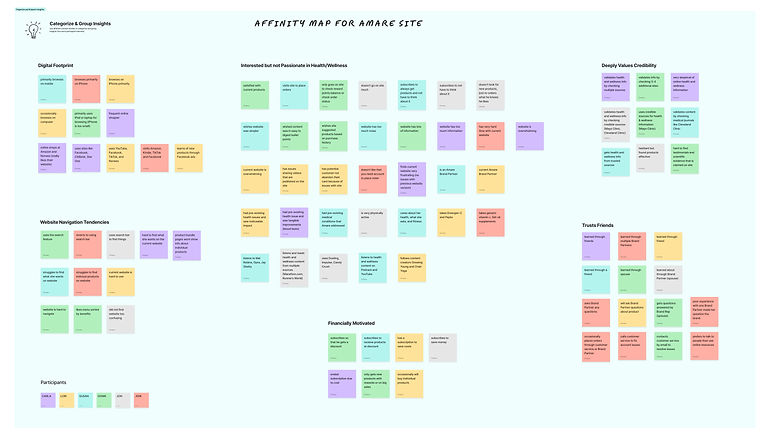
Affinity Map
This exercise highlighted the consistent needs and mental models of the users. Similar sentiment was shared by multiple participants.
User Persona
My clients customer base all fall within a similar health conscious profile. One key learning is this demographic is not particularly tech savvy and have an preference for very simple website structures and UI interactions.

Goals
The biggest area of overlap between user and business goals is finding the desired products easily and purchasing them conveniently which is the primary focus of the clients.
Problem Statement
Prospective customers have difficulty learning about and purchasing products recommended to them by Amare Brand Partners because the existing website is hard to navigate and confusing causing frustration and a loss of sales.
.jpg)
User Flows
There are two different journeys that can bring users to the site. Mapping out a user flow for each scenario helped structure the information architecture of the site.
.jpg)
Lo-Fi Wireframes
I worked closely with the clients on the low-fi wireframes to get their inputs early on. Responsiveness was a high priority as nearly half of users were mobile first web browsers. The initial layout featured four primary products and a Learn more page for any additional content.


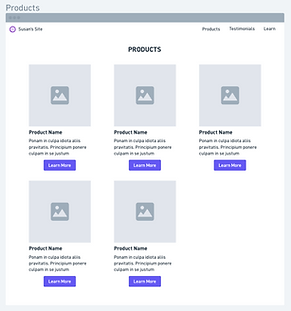


Integrating Client Feedback
I presented multiple layout options to the clients and highlighted pros and cons of each. During the initial brief they emphasized the importance of customer testimonials, so a dedicated page to highlight those was created.
Upon review, they asked that testimonies be moved to each respective product page, which I agreed was a more natural place for that content.
Additionally they suggested putting all the products as a dropdown in the menu to better group the content in the navigation bar.

Desktop
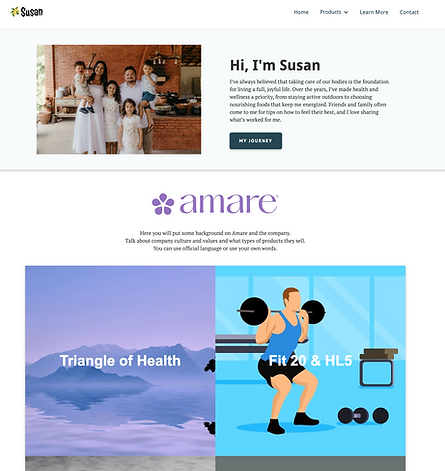
Usability Test &
High Fidelity Screens
Website link: https://amare-template.webflow.io/
After applying client feedback, the website was developed and tested. There was a steep learning curve as this was my first time using Webflow. It was a great learning experience and helped me see how the principles of CSS work in action.
The same six participants from my initial interviews took part in the usability test. All participants successfully completed each task without any errors, confirming the overall navigation and page structure was effective. In retrospect, a more comprehensive test may have highlighted more areas for improvement.
The main opportunity for improvement was making the product tiles feel more clickable since a few participants didn't realize they could be selected.


Tablet


Mobile


Reflection
This project was my first opportunity to lead an end-to-end UX project with real clients, from user research and wire framing to design and development in Webflow. Working closely with stakeholders throughout the process taught me how to balance user needs with business goals, while using research to support design decisions. One example was simplifying the site's navigation by organizing products into broader categories, a recommendation the clients adopted based on user feedback.
The final design was unanimously approved by the clients, and usability testing confirmed that users found the new site significantly easier to navigate than the existing experience. This experience shaped the way I approach UX today, using research, collaboration, and iterative testing to create solutions that meet both user and business needs.